In this article

Meld cards no longer count as double-faced cards under the latest Magic rules update. If your deck relies on an effect that specifically looks for a double-faced card, check whether it still works with a meld pair. The meld cards themselves still meld as before.
Rules update checked October 27, 2026: Wizards’ Mystery Booster Commander Edition Update Bulletin moves meld into its own section of the Comprehensive Rules. The practical change is narrow: an effect that refers specifically to “double-faced cards” no longer includes meld cards. This is a rules classification update with a few real card interactions attached, not a rewrite of how melding works.
What changed, exactly?
Meld was introduced in Eldritch Moon in 2016 and initially sat outside the double-faced card rules. Wizards moved it under that umbrella in 2023, partly to make cards that referenced double-faced cards easier to understand. The new rules bulletin reverses that classification. Meld cards now have their own rules section again.
Wizards says no other functional changes were made to meld itself. You still need the specified cards and the ability that instructs you to meld them; you still exile the pair and combine them into the melded permanent. The update changes which cards count when another effect cares about the double-faced category.
The deck check: read the exact phrase
Start with your card’s wording. If it asks for a “double-faced card,” a meld card no longer qualifies. If it names a particular card, artifact, or other characteristic, the wording continues to work on its own terms. Don’t replace one category with another in your head just because the physical cards have two faces.
The clearest Commander example is Tetzin, Gnome Champion, whose transforming back face is The Golden-Gear Colossus. Draftsim highlights the interaction with The Mightstone and Weakstone and Urza, Lord Protector: Tetzin’s back face cares about transforming artifacts, while its front-side ability can make use of artifact cards that meet the wording it specifies. Check the particular trigger rather than assuming every interaction with “two-faced-looking” cards has disappeared.
For a more direct reference, Overgrown Pest says to reveal a land or a double-faced card among the top five cards of your library. A meld card no longer qualifies for that second option. It remains a card you can draw by ordinary means; it simply doesn’t satisfy that named category for this effect.
Nick Fury, Agent of S.H.I.E.L.D. offers the useful counterexample. Its power-up lets you put a Hero, Equipment, or Vehicle onto the battlefield and then transform it if it is a double-faced card. A meld card does not become a valid choice just because it can meld later; and the ability’s “transform” instruction doesn’t turn melding into transforming.
What stays the same
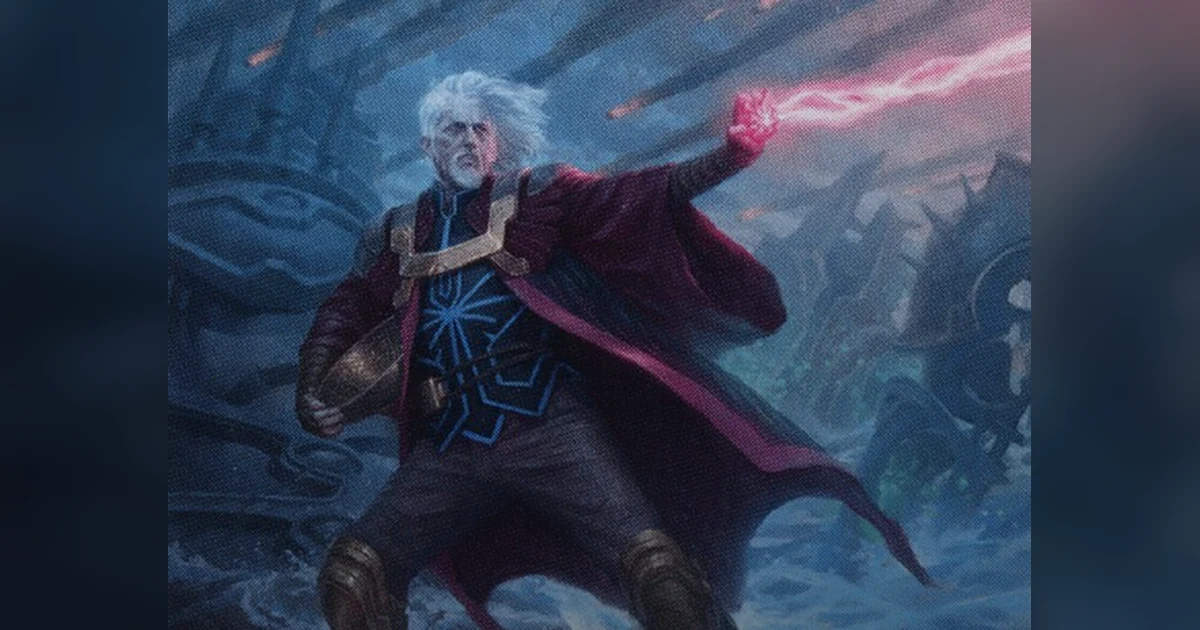
Urza, Lord Protector still melds with The Mightstone and Weakstone. Urza’s ability names that artifact and instructs you to exile the pair and meld them into Urza, Planeswalker. It does not depend on either card being a double-faced card. The Mightstone and Weakstone still enters with its choice of drawing two cards or giving a creature -5/-5, and it still taps for two colorless mana restricted to artifact spells.
That distinction is why this update is easy to overread. The pair’s defining interaction is written directly on the cards. What changes are the smaller surrounding effects that refer to double-faced cards as a general class. Your Urza deck does not need to remove the meld pair; it may need to revisit a side interaction or a card you included because it counted meld as double-faced.
What to do before your next game
Search your list for “double-faced” and inspect each exact card text. Recheck effects that reveal, find, transform, or otherwise interact with that category. Keep cards whose text specifically names your meld pieces or simply instructs you to meld them. The main takeaway: update the category check, not the meld plan.
For the precise changes and full rules text, use Wizards’ bulletin as the authority. Draftsim’s rules update article prompted this explainer; the examples and deck check here are organized around what a player should verify in an existing list.