In this article
Boros Commander decks often get described as “attack with creatures,” which is true in the same way that “a kitchen contains food” is useful advice. Ask what your commander rewards before combat, during combat, and after a board wipe. These five commanders each point to a different engine and support package.
Choose the engine before the theme
Start by deciding what your ordinary turns should do. Cast cheap spells while bodies hold up mana? Attack with artifacts useful before combat? Turn creature deaths into another round of value? Boros supports all three, but a deck trying everything usually draws the wrong half of everything.
A commander is not a decklist; it is a recurring incentive. The 99 should make that incentive cheap, reliable, and useful when the commander costs eight or is enjoying a short vacation in the command zone.
Aziza: spells, but bring three friends
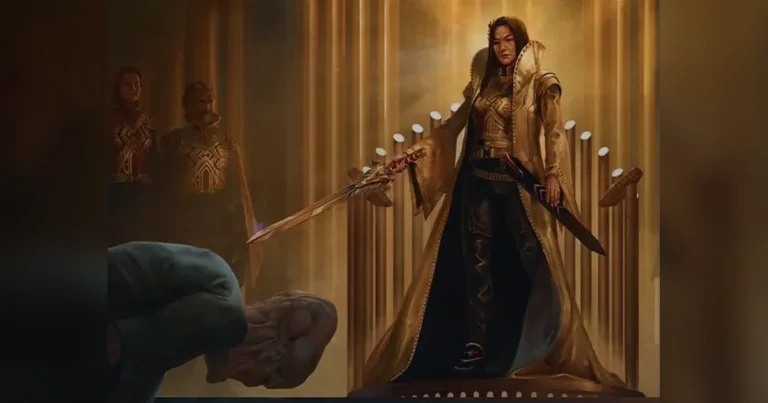
Aziza, Mage Tower Captain costs {R}{W}. Whenever you cast an instant or sorcery, you may tap three untapped creatures you control to copy it, with new targets allowed. That is a spell-copy engine hiding behind a creature-count requirement. The deck wants cheap interaction and card draw, but it also needs creatures that can afford to stay home and tap.

That suggests cheap token makers, creatures with useful tap abilities, and instants that remain good when copied. A two-mana removal spell that can take out two targets is meaningful; a five-mana sorcery that is clumsy in your opener does not become elegant because it has a twin. Keep enough low-cost spells to trigger Aziza naturally, and enough creatures that tapping them does not erase your next attack.
There is a sequencing decision here. If three creatures defend against a crackback, copying a spell has a real price. Treat the ability as a choice, not a mandatory rebate. Tokens are ideal when they are expendable or when tapping them advances a second plan.
Iroh: political gifts with an invoice
Iroh, Tea Master costs {1}{R}{W}, makes a Food when he enters, then at the beginning of combat on your turn may give an opponent control of a permanent you own. If you do, you create a 1/1 white Ally with a +1/+1 counter for each permanent you own opponents control. The permanent is a genuine gift. It does not come back later because the table has appreciated the gesture.
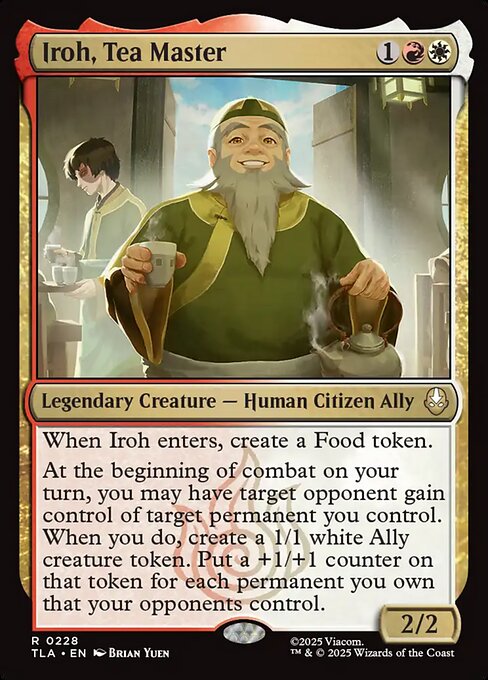
Give away permanents that already paid you: an artifact after drawing a card, a temporary token, or a creature after its enters trigger. A token avoids losing a real card, and while opponents control your token it still counts as a permanent you own for later Ally sizing. Donating non-tokens can grow the next Ally, but your board shrinks to make it. This value has an invoice.
Use token production, sacrifice outlets for unwanted objects, and ways to make the Ally matter immediately. If the only payoff must wait a turn, the table has time to remove it or turn your gift into a political problem.
Hofri: treat removal as a second entrance
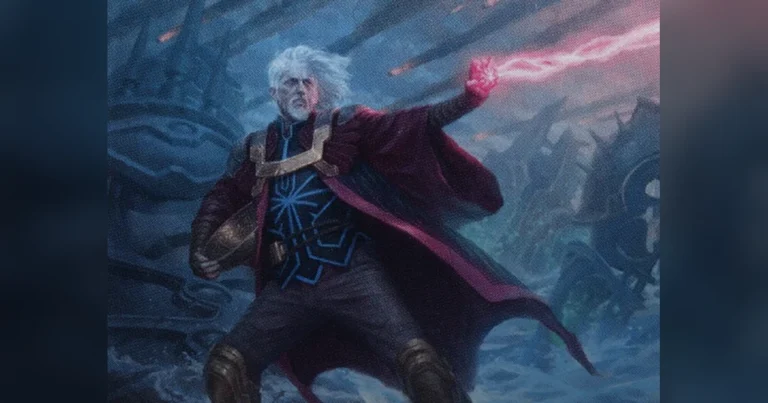
Hofri Ghostforge costs {3}{R}{W}. Spirits you control get +1/+1, trample, and haste. When another nontoken creature you control dies, Hofri exiles it and creates a token copy that is also a Spirit; when that token leaves, the exiled card returns to its owner’s graveyard. This is not a conventional blink engine: the creature must die, and the copy is temporary.

Creatures with strong enters or dies abilities are natural partners, as are sacrifice outlets that let you choose when the original dies. An enters trigger happens again as the Spirit copy arrives. The original’s dies trigger happens once; when the copy leaves, the original card returns to the graveyard rather than dying again. Favor a compact package of valuable creatures and dependable outlets over expensive bodies that do nothing without Hofri.
Hofri’s anthem gives Spirit copies haste, trample, and +1/+1. If a copy leaves, the original goes to its owner’s graveyard. This is a temporary second act, not permanent multiplication.
Alibou: artifacts that turn sideways
Alibou, Ancient Witness costs {3}{R}{W}. Other artifact creatures you control have haste. Whenever one or more artifact creatures you control attack, Alibou deals damage to any target and lets you scry, with both numbers equal to the number of tapped artifacts you control. The trigger counts tapped artifacts, not just the attackers that caused it.

Use artifacts that tap naturally: mana rocks, Clues, Treasures, and artifact creatures. Noncreature artifacts can tap before combat and still increase the trigger; artifact creatures must attack to start it. Token makers build the board, while untap effects and repeatable tapping can raise the count without sending every artifact into combat.
Haste is not evasion. Small artifact creatures can attack immediately and still trade down. Make attacks profitable, protect against sweepers, and keep noncombat artifact payoffs for stalled boards. Alibou deals damage and selects draws; blockers remain legally employed.
Three Dog: one Aura, many attachments
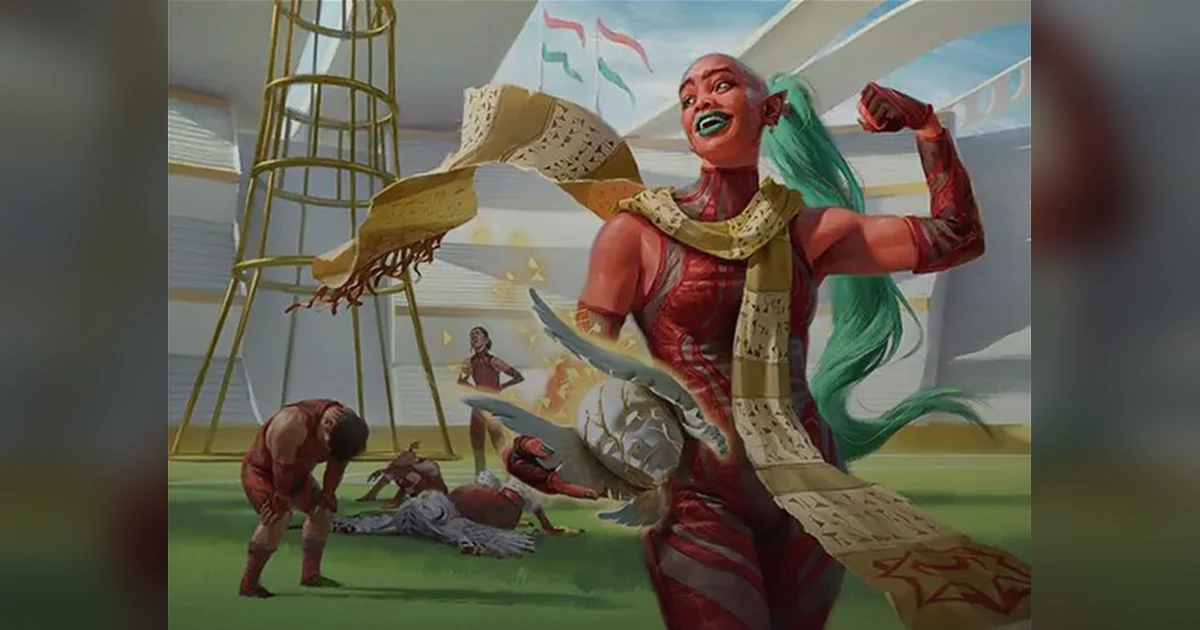
Three Dog, Galaxy News DJ costs {1}{R}{W}. Whenever you attack, you may pay {2} and sacrifice an Aura attached to Three Dog. If you do, you create a token copy of that Aura attached to each other attacking creature. That reads like a go-wide payoff, but it asks for the right Aura on the commander, enough other attackers, and two mana at the attack trigger.
Use inexpensive combat Auras and creatures that attack safely or arrive with haste. The best Aura works on several bodies, not only the commander. Sacrificing the original is part of the cost: Three Dog redistributes it as copies; it does not keep and duplicate it for free. With no other attackers, there is nothing to enchant. A modest token package makes the ceiling realistic.
A quick choice by play pattern
- Pick Aziza if you like interactive spells and can make three expendable or useful bodies.
- Pick Iroh if the table politics appeal and you are comfortable converting owned permanents into tokens.
- Pick Hofri if your favorite creatures already want to die and you want repeatable enters/death value.
- Pick Alibou if you want artifact creatures to attack while your other artifacts quietly charge the trigger.
- Pick Three Dog if you want a combat deck where a well-chosen Aura scales across a wide board.
Choose one main engine and a backup using the same cards. Aziza’s tokens can attack; Alibou’s rocks still ramp; Hofri’s creatures still work when the commander is removed. That overlap beats a ten-card package that needs one legend to survive a full turn cycle.
Quick verdict
Aziza is the spell-copy deck, Iroh is the permanent-donation engine, Hofri turns deaths into temporary repeat value, Alibou makes tapped artifacts support combat, and Three Dog spreads an Aura across attackers. Choose the play pattern you want to repeat on an ordinary turn, then make the supporting cards useful without the commander. Boros has plenty of ways to attack; the trick is making the attack step part of the engine instead of the entire business plan.
Source for topic discovery: Draftsim, “The 20 Most Underrated Boros Commanders in Magic Ranked.” This guide uses an independent decision-focused structure and analysis.