
In this article
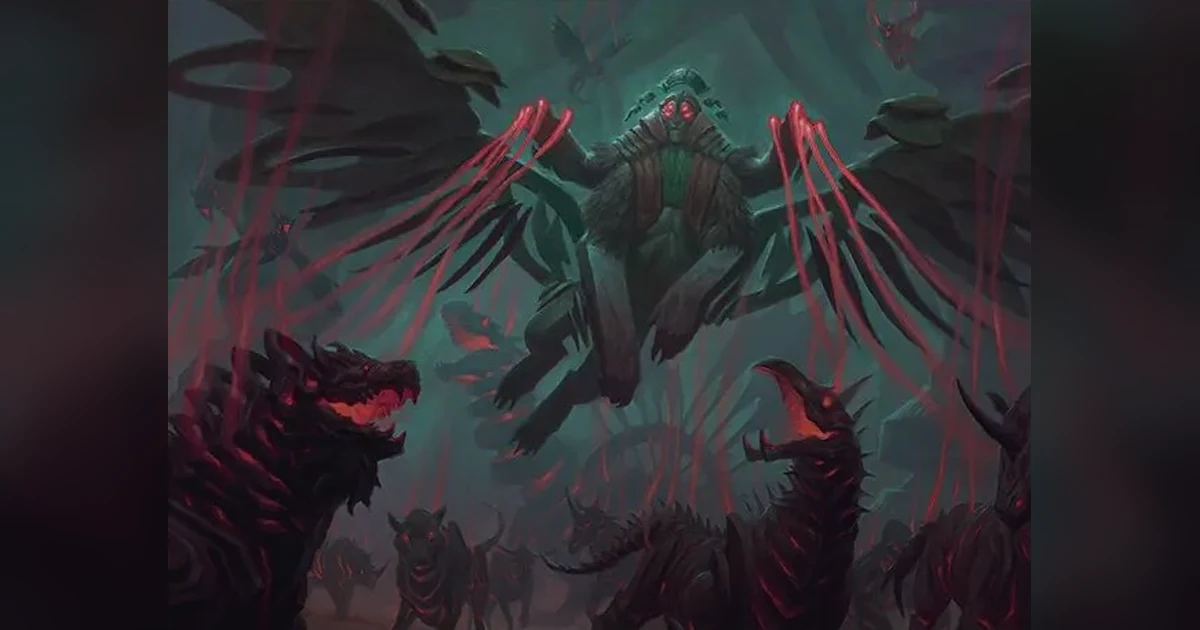
Aerid Konstrari looks like a ramp commander with a suspiciously large six-mana button. Agatha of the Vile Cauldron can make that button cheap enough to repeat, and a few cards turn the resulting Heartwoods into a real win. The useful question is not simply whether the deck can go infinite. It is what each loop actually produces, what it costs to start, and whether the rest of your list can turn that production into a game ending.
Start with the one-mana engine
Aerid Konstrari costs {1}{R}{G}{G}. Its activated ability costs {6}: create a Heartwood token, then Aerid gets +X/+0 until end of turn, where X is the number of artifacts you control. A Heartwood is a red and green artifact with “{T}: Add {R} or {G}.” It is not a creature, so it can tap for mana the turn it arrives.

Agatha of the Vile Cauldron reduces the cost of activated abilities of creatures you control by an amount equal to her power, but never below one mana. At five power, she turns Konstrari’s six generic mana into a one-mana activation. The first activation still needs one mana; after it resolves, tap the new Heartwood for red or green and use that mana to activate Konstrari again. Each pass creates another artifact, grows Konstrari until end of turn, and triggers any artifact-entry payoffs you have assembled.

Choose what “infinite” means in your list
The Agatha loop alone is repeatable, but it does not make mana. It spends one mana and makes a Heartwood that can produce one mana, so the next activation is funded and the loop is mana-neutral. It also produces arbitrarily many artifact-entry events and makes Konstrari arbitrarily large for the turn. Those are strong ingredients, not a win condition by themselves.
Roxanne, Starfall Savant changes the arithmetic. Whenever you tap an artifact token for mana, Roxanne adds one extra mana of a type that token produced. Now each Heartwood pays for the next one-mana activation and leaves one mana over. After paying the first activation, the loop generates unbounded red and/or green mana, alongside the artifact entries and Konstrari growth.
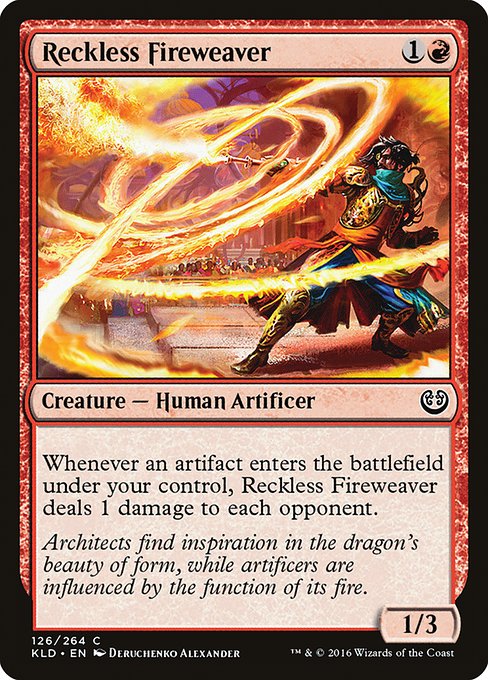
For a direct table-wide finish, Reckless Fireweaver deals one damage to each opponent whenever an artifact enters under your control. One opponent may die after enough iterations, and the others follow without needing combat math. Roxanne is also a payoff and an engine: her Meteorites ping on entry and her mana ability improves every Heartwood tap. With infinite mana, Konstrari itself can keep making artifacts, while a mana sink such as Walking Ballista can convert the surplus into a more compact finish. Check each outlet against the way your group actually ends games; “I have a large creature” is still a proposal, not a result.

A second line that does not secretly make mana
Nim Deathmantle plus Ashnod’s Altar offers a different loop with Konstrari. It asks for all three permanents, Deathmantle already attached to Konstrari, and an untapped Heartwood. You also need to have paid the setup costs to put the pieces onto the battlefield; the loop below does not refund them.
- Sacrifice Konstrari to Ashnod’s Altar, adding {C}{C}. Konstrari’s dies ability creates an untapped Heartwood.
- Tap the Heartwood for {R} or {G}. You now have three mana available.
- Pay {4} to Nim Deathmantle’s triggered ability, using one additional mana from another source. Return Konstrari and attach Deathmantle.
- Konstrari’s enters ability creates a Heartwood. That new token is the untapped Heartwood for the next pass; repeat with the same additional one-mana payment.
The loop is not mana-positive: each pass produces three mana from the Altar and one Heartwood but spends four mana to return Konstrari. One mana from outside the loop is required each time. What it does produce is arbitrarily many Konstrari death and entry triggers, plus Heartwood tokens. Add a trigger payoff or another way to spend the repeated enters events if you want the line to end the game. Without one, you have performed a lot of very expensive bookkeeping and reached the same board state.
Build for the weak link, not the screenshot
The Agatha line needs Konstrari, Agatha at five power, and one mana to start. Protecting Agatha’s power matters because a reduction that falls below five makes Konstrari’s activation more expensive; losing Agatha altogether shuts off the discount. The Roxanne version adds a third creature but pays you back in mana and supplies repeatable triggers. If you want the leaner package, use redundant artifact-entry payoffs so one removed Fireweaver does not turn the whole combo into a large bird and a pile of tokens.
All these engines are exposed to ordinary interaction: remove Agatha before you activate Konstrari and the cost reduction is gone; remove Konstrari before the ability resolves and it will not receive the size bonus, though the activated ability can still create its token; remove a payoff and the loop may continue without ending the game. Against the Deathmantle line, removing the Altar, Equipment, or Konstrari breaks a different required piece. Sequence the combo when you can defend its bottleneck, and keep a backup value plan for games where the table has removal. A commander that makes a Heartwood when it enters or dies is at least polite enough to leave a receipt.
Quick verdict
For compact setup and repeatable artifact triggers, pair Aerid with Agatha and a payoff. Add Roxanne when you want that same line to produce mana as well. Treat Nim Deathmantle and Ashnod’s Altar as a separate, mana-neutral engine with a recurring external cost, not as an infinite-mana shortcut. The cleanest build is the one whose payoff still works after the first obvious creature eats a removal spell.
Source: Topic discovered through Draftsim’s Aerid Konstrari combo article. Card text and details checked against Scryfall and the linked Scryfall entries above.