
In this article
The Ruinous Powers precon has a small identity crisis. Its box puts Abaddon the Despoiler in charge, while Be’lakor, the Dark Master waits in the 99 with an entirely different plan. You can upgrade either version without replacing half the deck. The first decision is not which expensive Demon to buy; it is what you want your first good turn to do.
Pick the turn you want to build around
Choose Abaddon if you enjoy setting up a big turn: make opponents lose life during your turn, then cast spells from your hand that gain cascade. Choose Be’lakor if you would rather make each Demon entering the battlefield produce immediate value, even when your hand is thin. Both are Grixis commanders, but they reward different cards and different timing. Shuffling both plans together is how a precon acquires a fascinating collection of six-drops and no reliable turn three.
| Commander | Reward | First upgrade priority |
|---|---|---|
| Abaddon | A high-impact spell-casting turn after opponents lose life | Reliable early mana and spells you actually want to cast from hand |
| Be’lakor | Cards on entry, then damage from later Demon entries | Reliable early mana and Demons that matter when they enter |

Abaddon: the damage must happen first
Abaddon costs five mana and has trample. Its important line gives spells you cast from your hand during your turn cascade if their mana value is no greater than the total life your opponents have lost that turn. That wording is less forgiving than “I dealt damage recently.” Life lost on the previous turn is gone from this calculation. A spell cast from exile is not a spell from your hand. And landing Abaddon after spending every resource on setup can leave you with no useful spell to cascade.
For this version, test your opening hands with one question: can I develop mana, land Abaddon, and still hold a spell worth casting on the following turn? The answer matters more than adding another dramatic top-end threat. The precon already has spectacle. It needs a stage manager who knows what a two-mana play is.
Do not strip every Demon out just because you chose cascade. Be’lakor can remain a powerful creature in the 99. But a card whose only purpose is to reward repeated Demon entries is less reliable when Abaddon is the plan. Start by sorting your cards into “helps the Abaddon turn,” “good without the commander,” and “only looks impressive under perfect lighting.” The last pile can pay for the upgrades.
Be’lakor: make the expensive creatures earn their rent
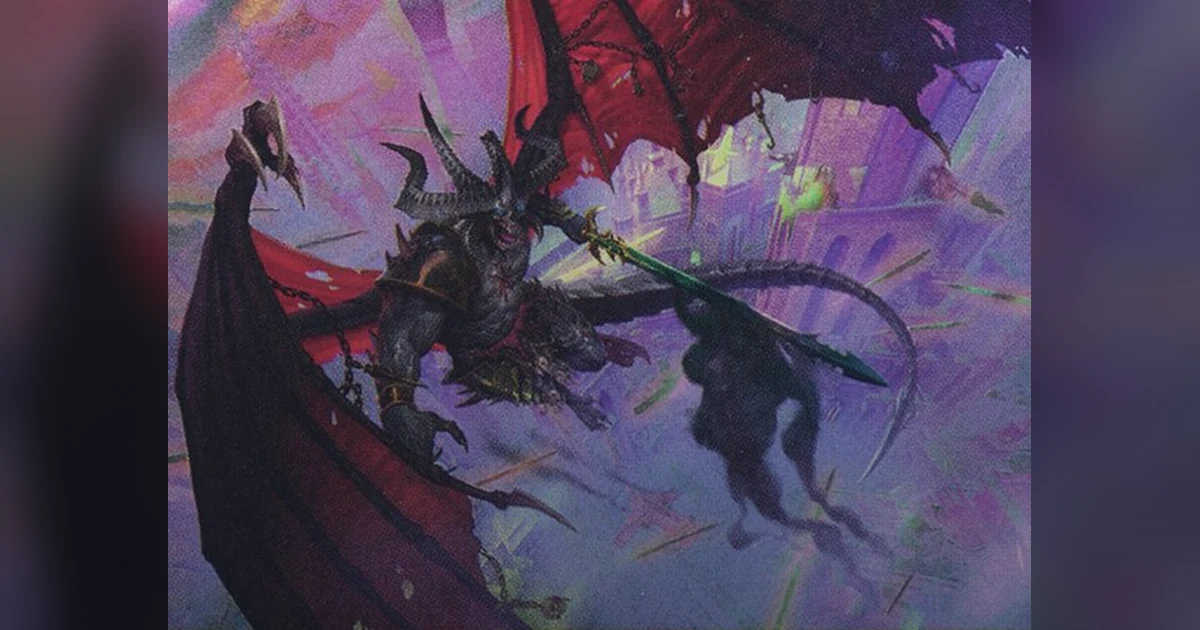
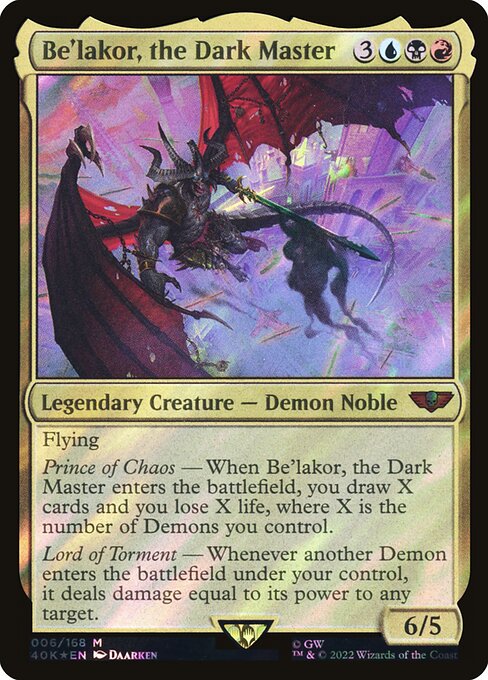
Be’lakor costs six mana and flies. When it enters, you draw a card and lose a life for each Demon you control, including Be’lakor itself. Afterward, whenever another Demon you control enters, that Demon deals damage equal to its power to any target. This makes the first Be’lakor turn a refill and later Demon turns potential removal or reach. It does not make every creature with “Demon” on the type line an automatic inclusion.
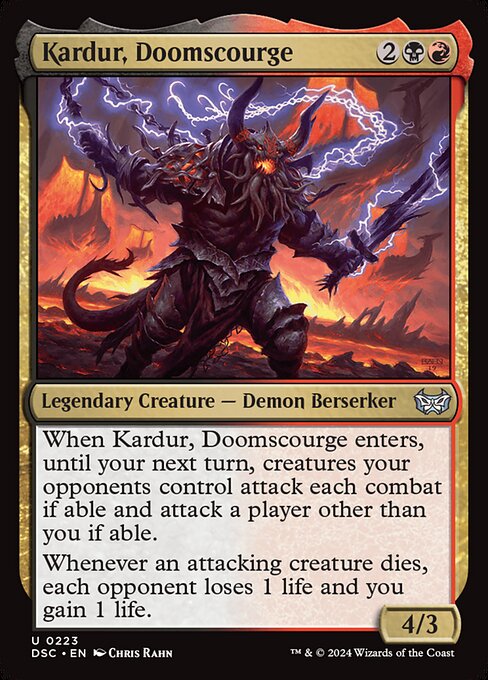
The best additions either help you cast Be’lakor earlier or do something useful on their own before it arrives. Kardur, Doomscourge is a practical example: its entry effect forces opponents’ creatures to attack each combat if able until your next turn and to attack someone other than you if able. With Be’lakor already in play, Kardur’s entry also triggers the damage ability. Without Be’lakor, it still redirects a combat step. Commander politics, but with a written notice instead of a whispered promise.
Chaos Defiler offers a different kind of insurance. It destroys one randomly selected nonland permanent from the permanents you choose among opponents when it enters or dies. Randomness means you cannot promise to hit the exact problem piece, but the card still interacts before Be’lakor appears; once your commander is present, its Demon entry adds targeted damage as well. A creature that works at both stages is more valuable than a six-mana passenger waiting for the bus to become an infinite combo. There is no infinite combo here; the bus is simply late.

Make three small changes before buying a new identity
First, improve the early mana. Fellwar Stone costs two and taps for a color an opponent’s land could produce. It is not guaranteed to make every Grixis color at every table, but it is a cheap attempt to get ahead of the precon’s heavy curve. Play several games before paying for an entire new land package; a smoother first three turns will tell you more than a shopping cart will.
Second, if Be’lakor is your commander, consider Herald’s Horn. Choose Demon as it enters: your Demon spells cost one generic mana less, and at upkeep you may reveal and draw a matching creature from the top of your library. This is support, not a reason to cut all interaction. Your table is allowed to remove your commander, even if it feels personally rude.
Third, make each cut serve your chosen plan. Under Abaddon, remove cards that only pay off after assembling a large Demon board. Under Be’lakor, trim spell-casting payoffs that do not advance mana, protection, or meaningful Demon entries. Keep cards that function when your commander costs two extra mana, because Commander tax is the format’s least charming subscription fee.
The practical verdict
Keep Abaddon at the helm if the memorable moment you want is one carefully prepared cascade turn. Move Be’lakor into the command zone if you want steadier rewards from casting Demons and already enjoy the precon’s creature half. In either case, start with early mana, play a few games, and only then replace the cards that repeatedly sit dead in your hand. The best upgrade is the one that makes the deck execute its own plan more often, not the one with the longest receipt.
Sources: Draftsim’s The Ruinous Powers upgrade guide prompted the topic; the original product contents were checked against Wizards of the Coast’s Warhammer 40,000 decklists. Card text, legality, images and art credits were checked with Scryfall on October 22, 2026.